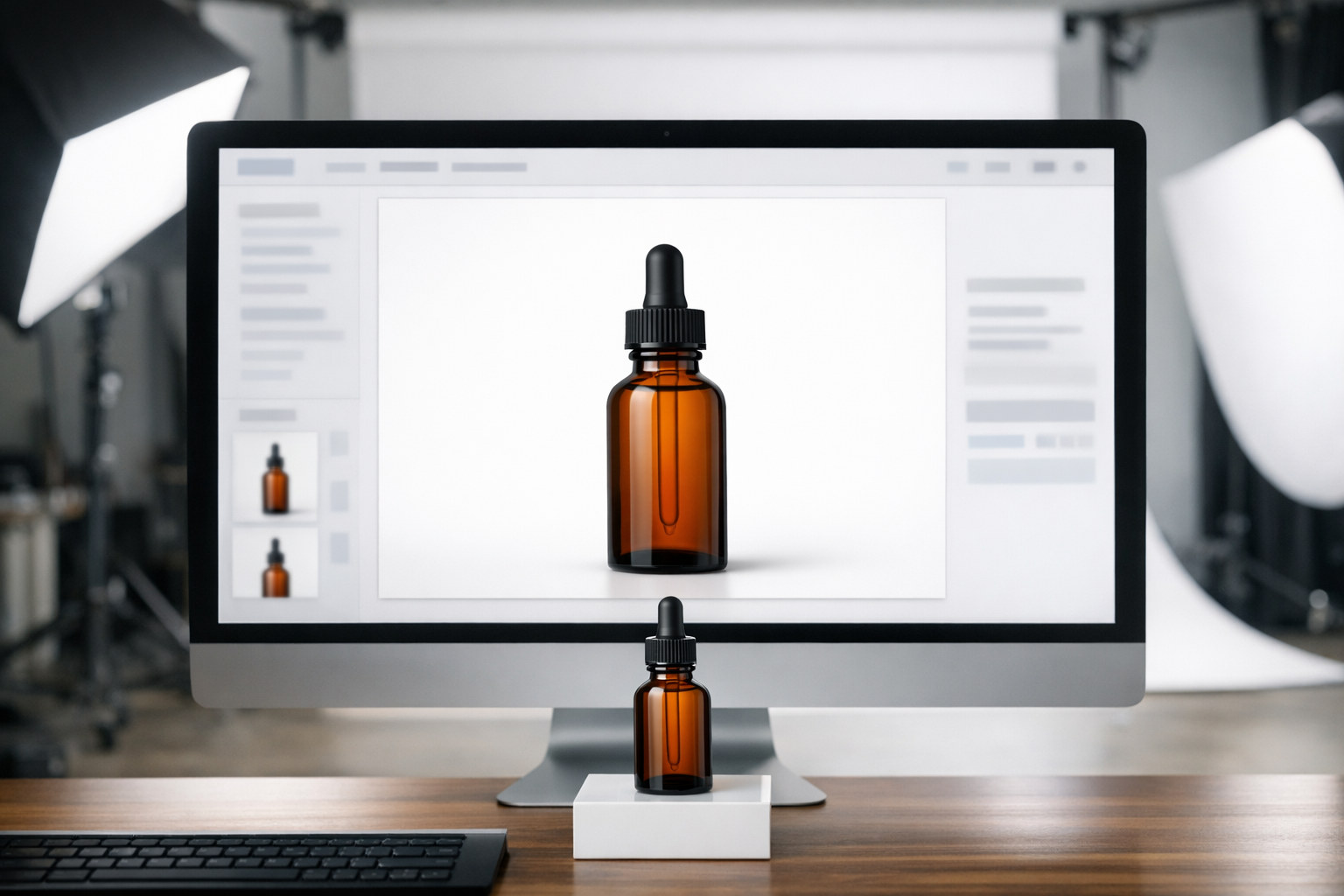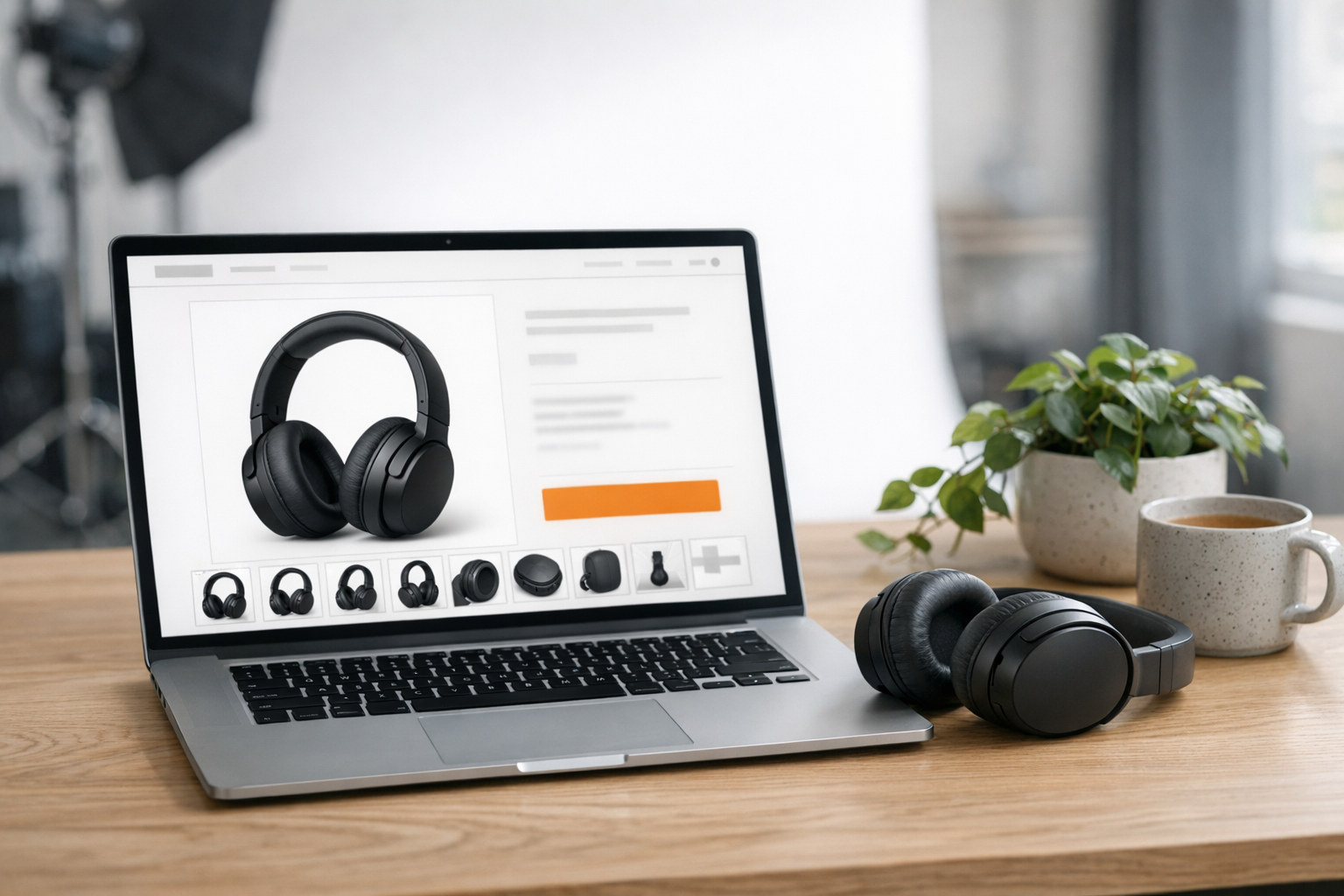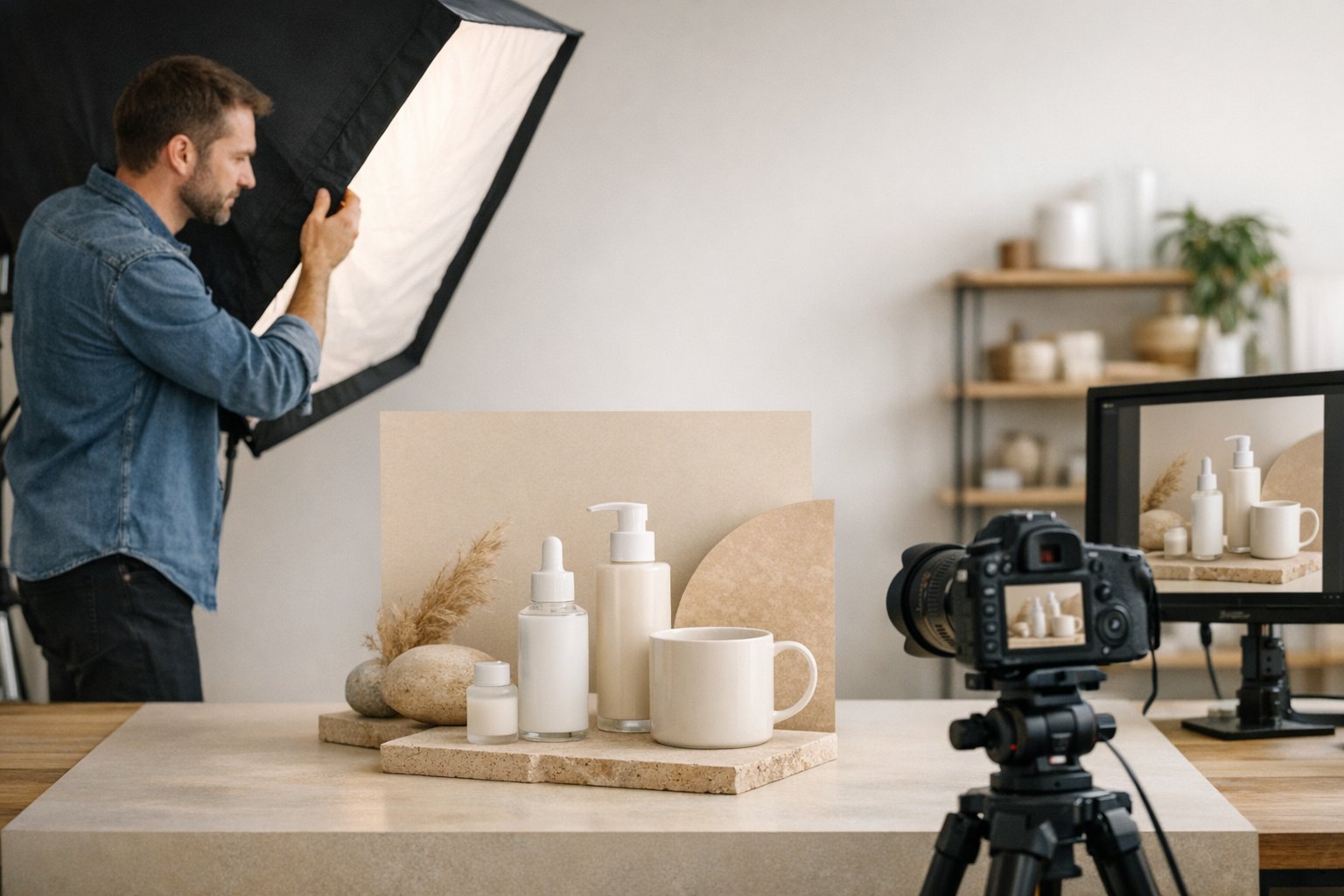
Before you ask a photographer for a quote, count what you actually need. “Photos of our new product” could mean a white-background listing image, a set of detailed angles, or a styled scene with several products. Those are different assignments.
The right photographer needs to understand the objects being photographed and where the finished images will appear. You also need a clear agreement about the work, the files, and the deadline.
Here is how to compare studios without getting distracted by a low starting price or a portfolio full of photographs that have little to do with your project.
Start with where the images will be used
List the places you need the photographs: Amazon, your own store, a wholesale catalog, social posts, or paid advertising. Each use can change the framing and deliverables.
An Amazon main image has platform and category requirements. A website banner may need empty space for a headline. A close crop that works in a square product tile may not leave enough room for a vertical advertisement.
Also identify the problem you want to solve. Perhaps customers cannot see a closure clearly. Maybe the current gallery does not show the product’s scale. Or your catalog looks inconsistent because items were photographed under different lighting.
That information is more useful than asking for images that “pop.” It gives the photographer something specific to plan and gives you a way to judge whether the proposed shoot fits the job.
Look for relevant work, then inspect the details
Start with the photographer’s product photography portfolio, but look beyond the overall mood. Find work involving similar materials, shapes, or visual problems.
A matte cardboard package is different from a clear bottle. Polished metal needs controlled reflections. Fabric needs enough texture to show what it feels like without exaggerating wrinkles. Relevant experience does not mean the studio must have photographed your exact product, but it should be able to discuss the challenges.
Look closely at label readability, edge quality, color, and reflections. Is white packaging still visibly shaped against a white background? Can you distinguish transparent edges? Do repeated products appear consistent from one image to the next?
Ask to see a complete product image set if the portfolio only shows individual hero images. One impressive photograph does not tell you how the studio handles a full listing or a growing catalog.
References and reviews can help you understand communication and reliability. They are not a substitute for reviewing the kind of work you need.
Turn your product list into a shot list
A product count and an image count are not the same thing. A jar photographed from the front, back, and above represents different finished images, even though there is only one item on the table.
Create a simple list with these fields:
- Product name or SKU and the version being photographed.
- Required angles and close-ups.
- Background or scene.
- Where each image will be used.
- Any approved text or measurements needed for graphics.
For example, a kitchen tool might need an overall view, a close-up of its moving part, and a use image showing how it is held. A close-up of the handle is useful only if it answers a question the overall view does not.
Label references clearly. Tell the photographer what you like about each one, such as the angle or softness of the lighting. A reference should guide the discussion, not become an instruction to copy another brand’s photograph.
Ask for a quote you can compare line by line
A headline rate tells you little without the scope behind it. Studios may quote per image, per product, per day, or for a defined project. None of those approaches is automatically better.
Ask what the quote includes. That may involve planning, product preparation, photography, styling, retouching, graphic design, models, props, location costs, and file delivery. Check which items apply rather than assuming they are all part of a basic package.
Then ask what could change the cost. More product variations, a new scene, extra edits, or a changed brief may require additional work. Get the approval process for those changes in writing before the shoot.
If you are comparing quotes, give each studio the same brief. Otherwise, the least expensive proposal may simply include fewer images or less editing. A useful comparison starts with the same deliverables, not the same heading on an estimate.
There is no need to guess at a universal price range. Ask for a written quote based on your actual products and intended uses.
Agree on editing, revisions, and usage
“Retouched” can describe very different levels of work. Ask whether the quote covers dust removal, background cleanup, color correction, label work, and any more involved fixes your product may need.
Be specific about accuracy. Removing a fingerprint is different from changing the shape of a handle or making a surface appear smoother than it really is. Your customer still needs to recognize the item that arrives.
Clarify how revisions work. Ask what counts as a correction, what counts as a change in direction, and what happens if a new angle requires another shoot. Decide who on your side will collect feedback and approve the finished work.
Usage needs its own conversation. Confirm whether the agreement covers your store, marketplaces, advertising, social media, packaging, and print where relevant. If models or outside creative contributors are involved, ask whether their permissions cover those uses too.
Do not assume a fee automatically includes editable design files, camera originals, copyright ownership, or unrestricted use. Put the deliverables and permissions you need into the agreement.
Put the deadline and approval steps in writing
Ask when the studio can schedule the work, when you will receive a first review, and when final files are expected. Those are separate milestones.
Also ask when the turnaround clock begins. It might depend on product arrival, an approved brief, confirmed payment terms, or other project requirements. A delivery estimate is not useful if you and the studio are counting from different starting points.
Work backward from your launch. Leave room for shipping, sample problems, review, revisions, and uploading the finished assets. If your packaging is still changing, say so before setting the date.
Tell the studio who can make decisions and when that person will be available. A project can stall even after the photography is finished if nobody is ready to approve the copy, measurements, or final selections.
Discuss product handling before sending anything
Send the studio a description of the products, including their size, weight, materials, and anything that makes them difficult to handle. Do not assume every studio can accommodate every object.
Ask how many samples are needed and whether any shot involves opening, assembling, filling, cutting, or otherwise changing the item. A photograph of a sealed package and a photograph showing its contents may require different preparation.
Use clean, current samples. Flag fragile surfaces, removable labels, and packaging that creases easily. Include a packing list so the studio can identify each version without guessing.
Agree on return arrangements, shipping costs, and what happens to consumable or altered samples. If you prefer to bring products yourself, confirm whether a drop-off appointment is available before traveling to the studio.
Choose the studio that explains the work clearly
A useful proposal connects the shot list to a production plan. The photographer should be able to explain what will be photographed, what needs preparation, and which choices affect the result.
Be cautious about promises of guaranteed marketplace approval, a particular sales increase, or rankings. Photography can help customers understand a product, but it does not control every part of a listing or a purchase decision.
Before booking, make sure you can answer four questions: What will I receive? What does it cost? When will I receive it? What am I allowed to do with it?
If those answers are vague, ask for clarification before shipping products or committing to a date.
Hiring a product photographer in the Grand Rapids area
Product Captures is a product photography studio in the Grand Rapids area. If you are comparing local studios, review our ecommerce photography work and decide whether the approach suits your products.
You do not need a polished creative brief to start a conversation. A product list, the places you will use the images, examples you like, and an honest deadline are enough to make the first discussion useful.
To discuss a project, send a project inquiry through our contact page, email [email protected], or call (616) 259-0092. Share the details first so the scope and quote can be discussed together.
Frequently asked questions
How do I choose a product photographer?
Look for relevant portfolio work, clear communication, and a written scope. Compare how studios handle the materials, platforms, and image types you need, rather than choosing on style or the starting rate alone.
How much does hiring a product photographer cost?
It depends on the products, image count, scenes, preparation, editing, and usage requirements. Ask for a project quote with clear inclusions and potential extras. Compare studios using the same brief instead of assuming their quoted rates cover identical work.
Should I hire someone local or ship my products?
Either can work. A local studio may make coordination easier, while shipping can expand your options. Discuss the product’s size, fragility, handling needs, and return arrangements with the studio before deciding.
How long will a product photography project take?
Ask for a schedule based on your specific brief. Separate the shoot date, first review, and final delivery. Confirm what must be approved or received before work begins, and allow time for feedback and revisions.
What should I send with a photography inquiry?
Include a product list, approximate image needs, intended platforms, style references, and your deadline. Mention variations, difficult materials, graphics, and special handling. If you already have listing links or existing photos, include those too.