Would you buy a supplement if you couldn’t read its label? Probably not. Now imagine the bottle looks stretched, the colors seem unnatural, and the ingredients panel is nowhere to be found.
You’d have questions, and your customers would, too. That’s what makes photographing supplements different from photographing ordinary products.
You’re selling something people put into their bodies. Naturally, they want to inspect what they’re buying. Your images should help them do exactly that. Thoughtful supplement product photography makes packaging details clearer, keeps colors accurate, and presents products consistently.
But achieving that takes some planning.
Let’s explore the images your brand needs, the mistakes worth avoiding, and the details photographers shouldn’t overlook.
Why Supplement Photography Needs More Thought Than You Think
Walk down any supplement aisle or scroll Amazon. Everything looks the same: white tub, dark cap, and bold label.
That sameness is your first problem. Your photos are often the only thing separating you from the next brand.
Trust is the second problem. Many people wait one to three months before they feel anything. Until then, your imagery carries credibility your product can’t prove yet.
Scale is the third. Most brands sell several flavors and formulas. Each needs matching color, size, and lighting. Light one SKU differently, and your product page looks like three brands. Fixing it later means reshooting the lot.
Here’s the mindset shift. Stop asking, “Is this photo pretty?” Start asking, “Does this photo earn trust in two seconds?”
The Supplement Photos Your Brand Actually Needs
Some guides say one clean side-on shot is enough. For a tiny store, maybe. On a competitive listing, it isn’t. Buyers want proof from several angles.
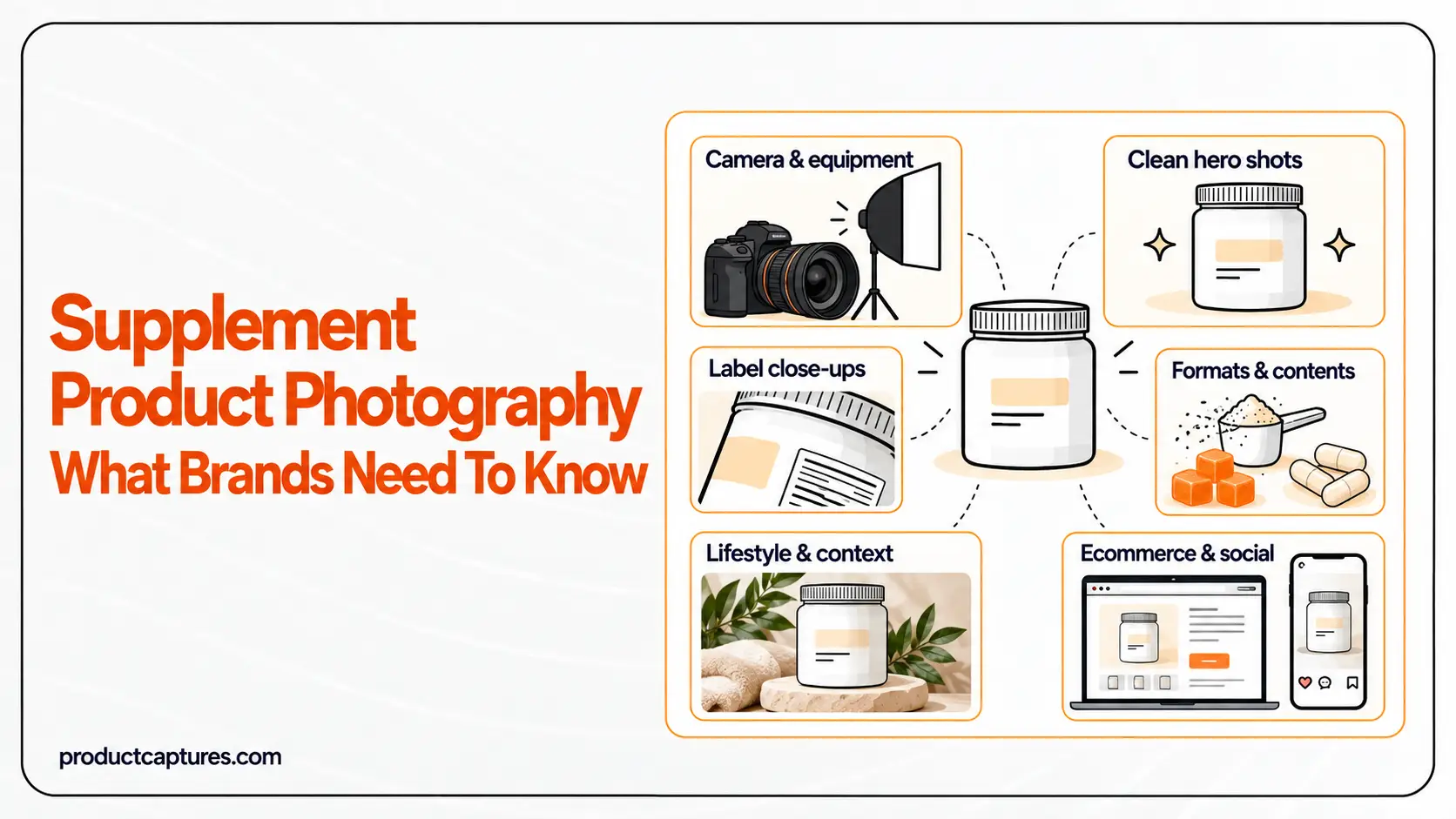
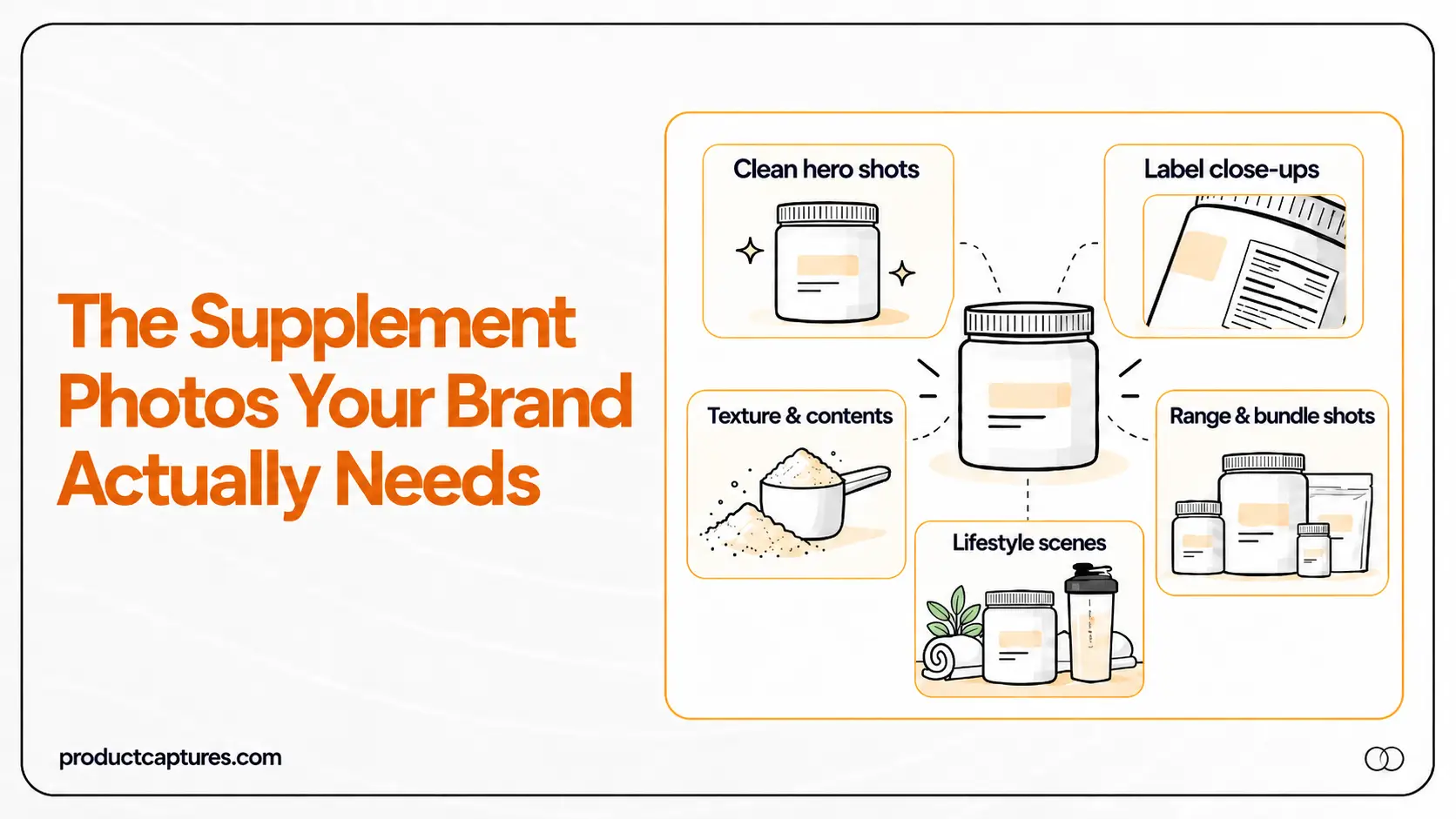
A solid supplement set usually includes:
- Clean hero shots. White background product photography with straight-on and 45-degree views. Every SKU gets these first.
- Label close-ups. Supplement facts, dosage, and certification marks. Sharp enough to read.
- Texture and contents. Capsules, gummies, or a powder scoop. These show what customers actually get.
- Lifestyle scenes. Lifestyle product photography shows where the product fits: a kitchen counter, a gym bag, a morning routine.
- Range and bundle shots. Your whole lineup together. Great for category pages and bundles.
Don’t forget the shipping box or subscription pouch; retailers notice when it’s missing.
Your sales channels should guide your photography choices. Amazon listings often prioritize clean product images, while brand websites have more room for lifestyle storytelling. If you’re selling across both, our professional ecommerce product photography services can help you create a consistent image library for every platform.
Small Photography Details That Can Change Everything
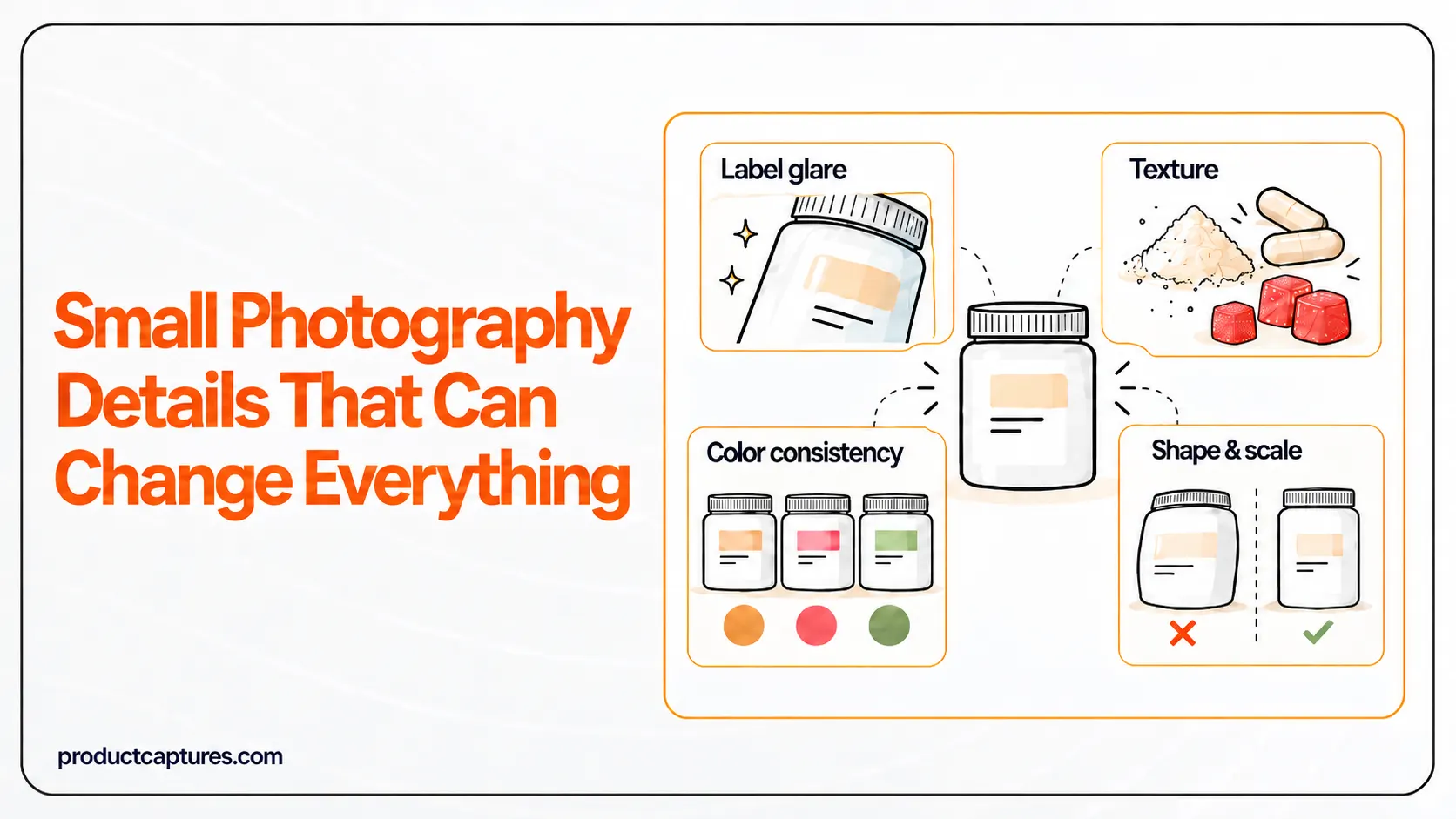
Glare on the label. Glossy tubs and shrink sleeves bounce light everywhere. If the supplement facts panel washes out, shoppers assume you’re hiding something. Pros control reflections and clean up what’s left.
Texture. A matte cap, a translucent gummy, and a pile of powder all react differently to light. A photographer who only shoots glossy skincare bottles will often get them wrong.
Color across flavors. Berry, citrus, and unflavored should match your brand color exactly. In a grid listing, one off-color bottle looks like a production mistake.
Shape and scale. Shoot too close with a wide lens, and the bottle bends. Labels tilt, and tubs look squat. Everything should sit straight and true to size.
Here’s a simple test. Zoom every image to 100% before the shoot wraps. If you can’t read the fine print, a customer won’t either.
Why Beauty Product Photography Habits Don’t Transfer
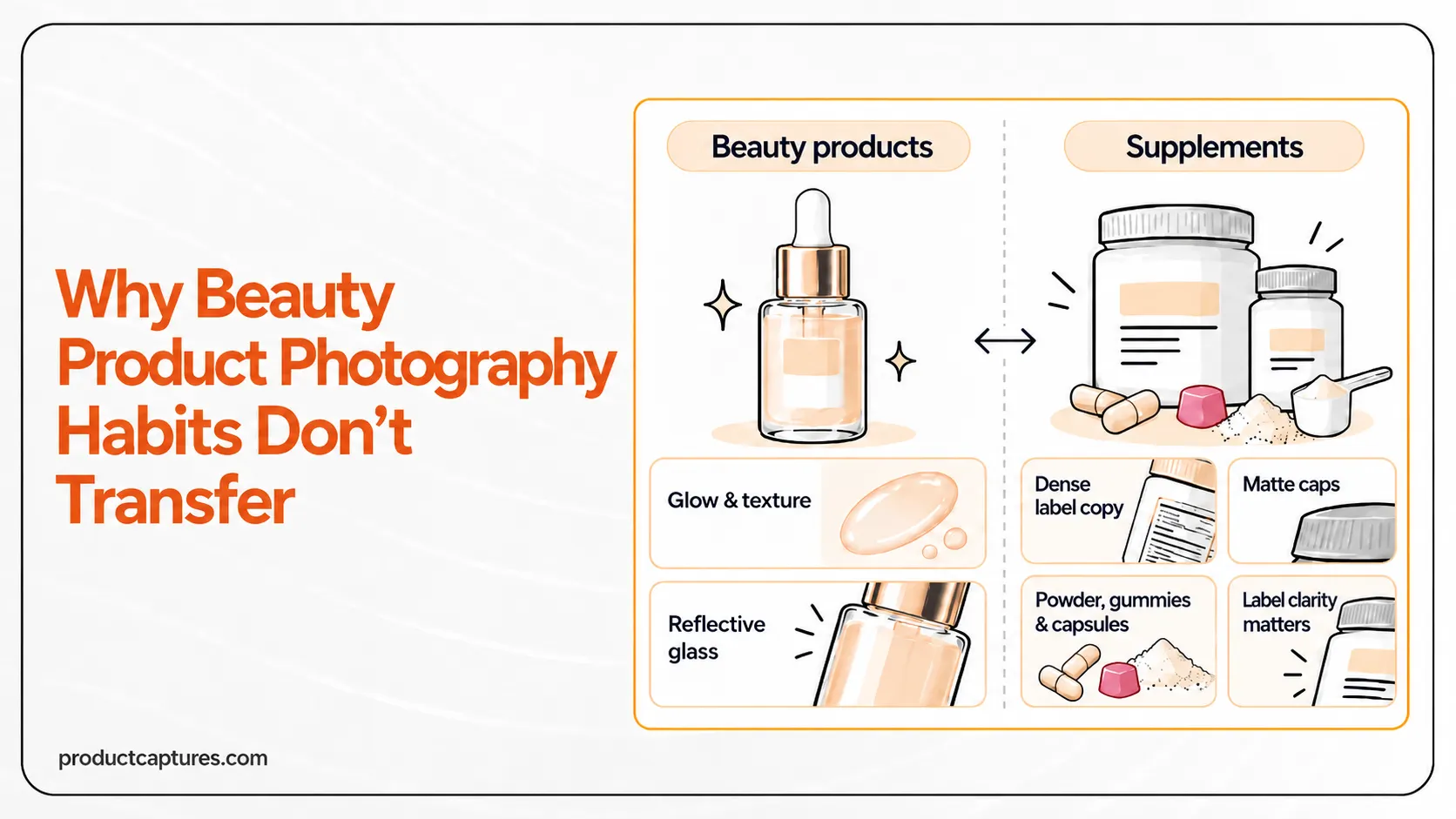
Many photographers come from beauty. Skincare and supplements look alike on a shelf. Both are bottles, caps, and labels. But the rules differ.
Beauty product photography chases glow and texture. Serum glass is glossy and forgiving. Supplement tubs are matte, ribbed, and wrapped in dense label copy. Gummies turn translucent. Capsules reflect light in odd ways.
So a copied skincare lighting setup underlights half your range. Vitamin photography has its own quirks, too. Ask any photographer for supplement examples, not just beauty ones. If their portfolio shows only serums, ask how they’d handle your label and cap.
Don’t Let Attractive Photos Tell the Wrong Story
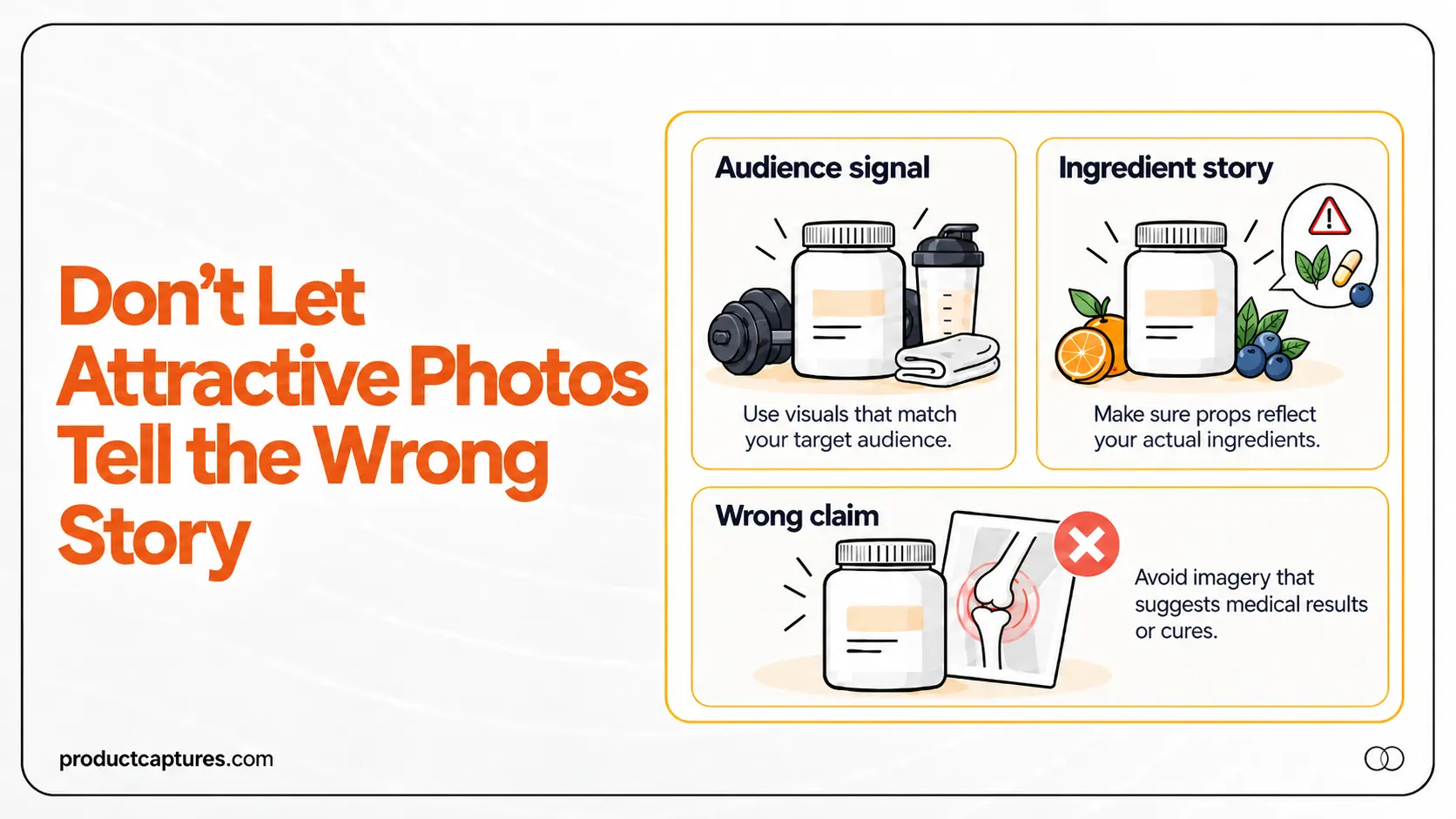
A beautiful photo can still send the wrong message. Three traps come up often.
The wrong audience signal. Props announce who your product is for. Chalk and lifting belts say hardcore performance. Fruit and oats say everyday wellness. One supplement brand selling to adults aged 35 to 60 had gym-heavy imagery. It didn’t match its buyers. Shifting to food and everyday life fixed the mismatch.
Wrong ingredient story. Strawberries beside your tub imply strawberry in the formula. If it isn’t there, don’t style it. Props should reflect what’s actually inside.
The wrong claim. Avoid visuals that imply medical results, like before-and-after bodies or pills poured like medicine. Keep the label accurate and readable. Review claims with whoever handles your compliance before the shoot, not after.
Good styling supports the product. It never oversells it.
One Product, Different Platforms: Here’s What Changes
The same bottle needs different photos depending on where it lives. Plan for each home before you shoot.
| Platform | What it needs | Best shot types |
|---|---|---|
| Amazon | White-background main image, a full image stack, ideally video | Hero, label close-up, contents, infographic-ready angles |
| Your website | Consistent, on-brand visuals that explain the product | Hero, texture, lifestyle, range shots |
| Instagram and TikTok | Scroll-stopping, human, less polished | Lifestyle, UGC-style clips, color-themed grids |
| Retail and press | Retailer-specific crops and backgrounds, high-resolution files | Clean packshots, unbranded backgrounds |
On Amazon, check the current image rules. Zoom generally requires at least 1,000 pixels on the longest side. But that’s just one requirement.
If keeping up with these details feels overwhelming, Amazon photography services can take the technical work off your plate. That way, you can focus on growing your brand while leaving the image requirements to the experts.
How To Plan a Supplement Shoot Without Wasting Your Budget
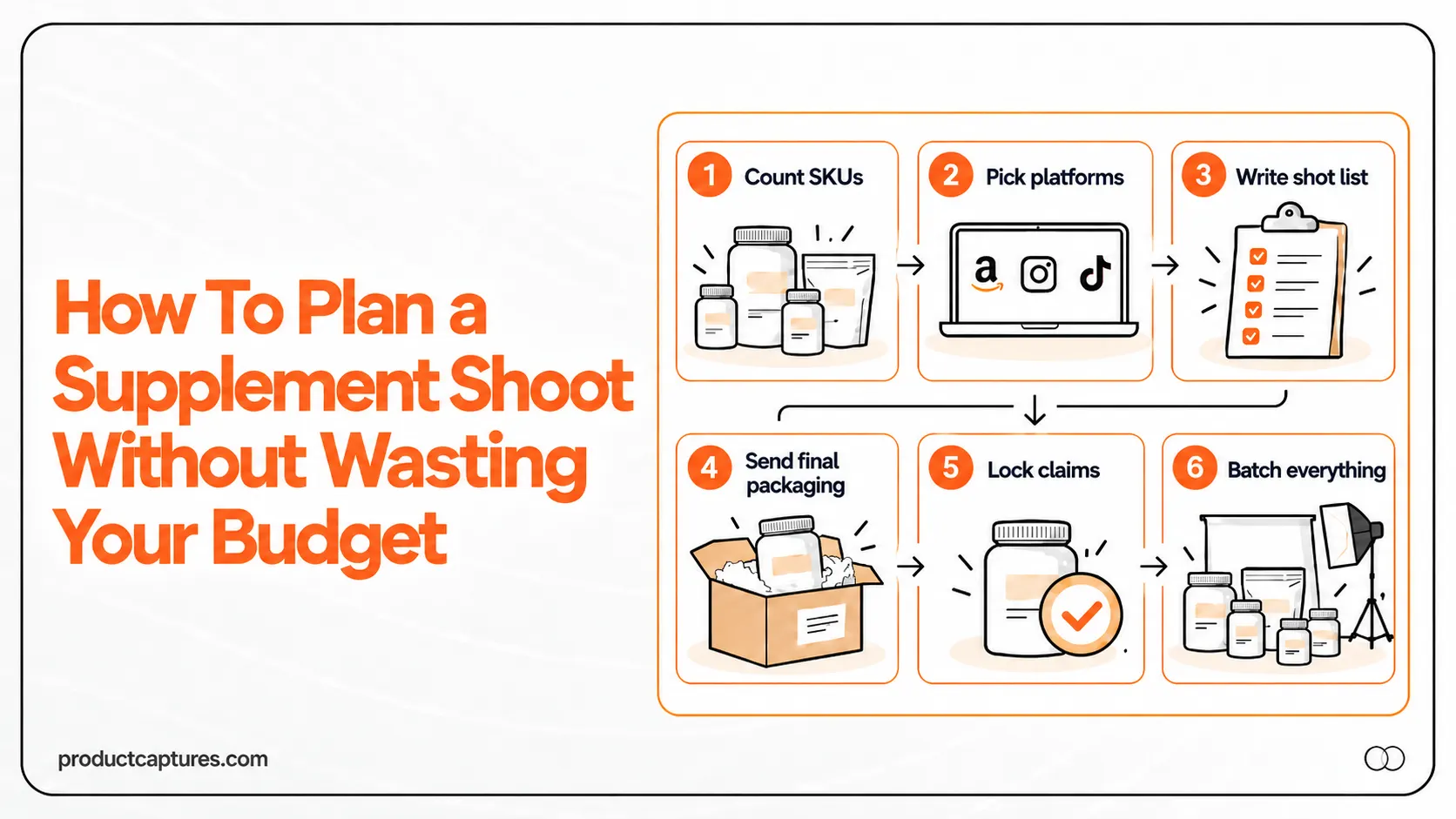
Budget disappears in reshoots, not in the first round of product photos. A little prep prevents most of them.
- Count your SKUs and variants. Every flavor, size, and pack counts. This number drives your cost.
- Pick your platforms first. Amazon, your site, and social media each need different shots and file specs.
- Write a shot list per SKU. Angles, close-ups, lifestyle frames. Agree on it before shoot day.
- Send final packaging. Mockups and old labels cause problems. Send spare units too, since dents and scuffs show.
- Lock your claims. Get label text and styling approved before anyone presses a shutter.
- Batch everything. Studio, lifestyle, and texture shots in one session cost less than three separate ones.
A short written brief covering all six saves hours of back-and-forth.
When Is It Worth Hiring a Professional Photographer?
DIY is fine early on. Testing one flavor? Posting behind-the-scenes clips? A phone and a window can work.
The math changes when money is on the line. Hire a pro when:
- You’re launching on Amazon or pitching retailers.
- You sell several SKUs that must match.
- You run paid ads and need images that hold up on screen.
- Glare, color, or label legibility keeps ruining your shots.
- New flavors keep forcing reshoots.
Think of it this way. Weak photos cost you clicks every day. A good set pays you back for years.
Product Captures keeps the process simple. You share your brief and send your products, and the studio handles production and editing. Then you download your files and launch.
A Quick Checklist Before You Approve Final Images
Before you sign off, run this five-point check.
- Can you read the supplement facts at 100% zoom?
- Do all flavors match your brand colors?
- Is the background pure white and even across every SKU?
- Did editing remove glare without erasing label detail?
- Are the files sized for Amazon and your own site?
Fix problems now. A round of edits costs far less than a reshoot.
Final Thoughts
Supplement buyers can’t see results, so they read signals. Sharp labels. Matching colors. Honest styling. Photos that look like they came from one confident brand.
Get those right, and your images do real selling work.
Great supplement images do more than look attractive. They help shoppers see what makes your product worth considering. Explore ecommerce product photography with Product Captures, or get a quote for your next launch.
Frequently Asked Questions
Before we wrap things up, let’s clear up a few questions that might still be on your mind.
How many photos does each supplement need?
Start with a hero shot, a 45-degree angle, a label close-up, and one lifestyle frame. Amazon listings can use a larger stack, so plan extra angles and infographics.
Should I use white backgrounds or lifestyle photos?
Use both. White backgrounds suit Amazon main images and retail. Lifestyle photos work better for ads, social posts, and your own website.
How much does supplement product photography cost?
Cost depends on SKU count, shot list, styling, and retouching. Ask for an itemized quote so you can compare studios line by line.
Can I shoot supplement photos with my phone?
For casual social posts, yes, with good window light. For listings, it’s risky. Glare, color shifts, and inconsistent angles show up fast.
What image size does Amazon require?
Amazon generally asks for at least 1000 pixels on the longest side so zoom works. Check Amazon’s current guidelines, and shoot larger to be safe.